Our verdict: Volufiline is a real cosmetic ingredient, not an invented product. But the promise that a topical serum can reliably rebuild significant facial fat is not backed by convincing independent clinical evidence. Here is what shoppers should know before paying for a bottle.
If a tiny skincare bottle could deliver the effect of professional facial filler, it would be quite the plot twist. For this investigation into is volufiline a scam, we looked at the original ingredient-supplier claims, the limits of the human research, FDA guidance, and firsthand consumer discussions. We did not personally test a serum. For a practical framework for checking whether evidence supports a specific promise, see how to assess product claims against evidence.
Editorial disclosure: This is an evidence-based desk review of an ingredient sold in multiple finished formulations. We did not purchase, apply, photograph, or clinically test a specific branded Volufiline product. Read the full editorial and medical disclaimer below.
Is Volufiline a Scam? The Ingredient Versus the Hype
Volufiline is a trademarked cosmetic ingredient developed by Sederma, now within Croda. The combination includes hydrogenated polyisobutene and Anemarrhena asphodeloides root extract. Its marketing focuses on a compound associated with fat-cell biology called sarsasapogenin.
That makes Volufiline a legitimate ingredient with a plausible proposed mechanism. It does not establish that a cosmetic serum grows new fat in human cheeks, lips, or tear troughs. Those are very different claims. The words “real ingredient” and “proven result” are not synonyms.
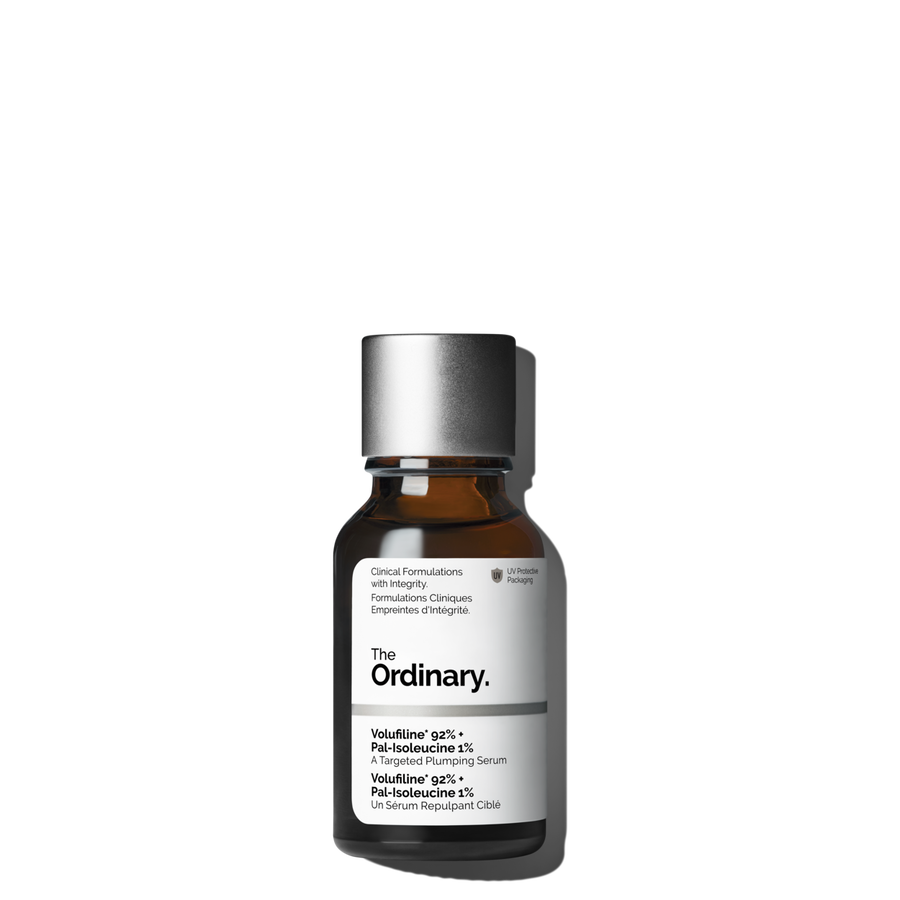
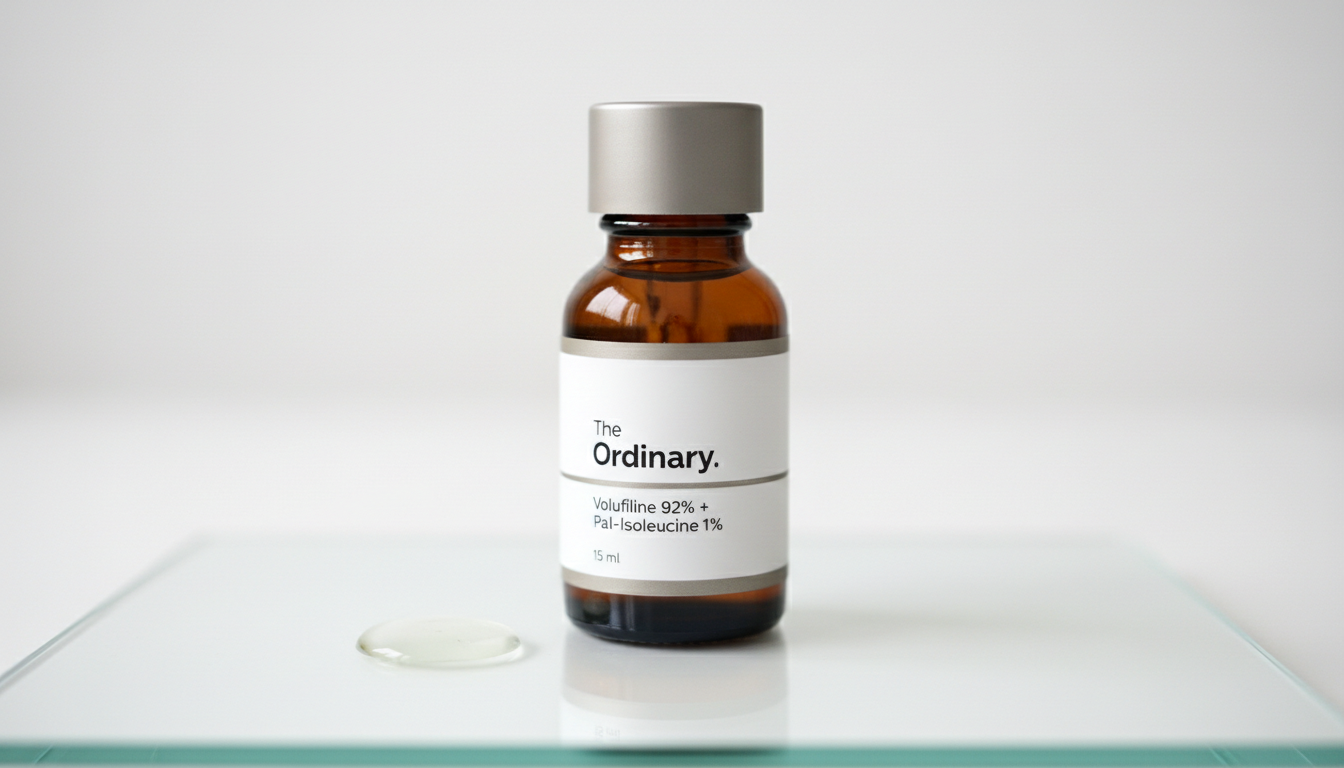
The well-known finished product pictured here is The Ordinary Volufiline 92% + Pal-Isoleucine 1% (15 mL). It contains 92% of the supplier’s Volufiline blend, not 92% pure active sarsasapogenin, plus 1% palmitoyl isoleucine. The manufacturer describes a targeted cosmetic plumping effect. The finished product has its own formula and directions, so findings about a 5% supplier test cream should not be presented as direct clinical proof for this bottle. See The Ordinary official product information. Other online Volufiline brands vary in ingredients, concentrations and policies.
Does Volufiline Actually Work? What the Research Found
The original supplier technical information includes laboratory experiments involving adipocyte activity and a small human study. Thirty women aged 18–35 used a cream containing 5% Volufiline on one breast twice daily for 56 days, with the other side serving as a comparison.
The supplier reported an average volume change of 1.4% after 28 days and 2.2% after 56 days. An 8.4% figure sometimes spotlighted in marketing reflects a selected responder result, not the overall average. Crucially, the day-56 result reported a p-value of 0.1, which does not meet the conventional 0.05 significance threshold.
In other words, this small supplier-associated study is suggestive but inconclusive. It was also conducted on breast tissue, not on the specific facial sites now featured in viral videos. Clinical evidence for substantial facial-fat restoration from topical Volufiline remains limited.
Research reference: Volufiline technical dossier (supplier data). The dossier should not be mistaken for an independent large-scale trial.
Why Volufiline Before-and-After Videos Can Be Misleading
Skincare photographs are notoriously sensitive to lighting, camera angle, facial expression, makeup, and ordinary day-to-day hydration. Skin that retains more surface moisture can look a little smoother and fuller without any measurable gain in underlying fat.
There is also the delivery problem: a laboratory mechanism does not prove that a finished serum penetrates the skin to reach relevant living fat cells at an effective concentration. No reliable evidence currently establishes that consumer application mimics an injectable volume treatment.
What Do Real Volufiline Customers Say?
Public conversations on r/30PlusSkinCare include users who say their under-eye area or smile lines looked subtly improved and others who describe little or no difference even after lengthy use. Another Volufiline update discussion recounts perceived changes, while a further user discussion illustrates mixed outcomes.
Those accounts are firsthand reports, not verified clinical measurements. They cannot isolate Volufiline from other products, changing routines, or the placebo effect. Their inconsistency is precisely why buyers should resist sellers offering guaranteed or permanent plumping.
Is Volufiline Actually Safe?
Volufiline is incorporated into cosmetics, and its supplier describes safety assessments. That does not mean every serum is suitable for all skin types or every placement. A finished product may include fragrance, oils, solvents, or other ingredients capable of causing irritation or breakouts.
Extra caution makes sense near the eyes, where products should only be used as their labels direct. Patch testing on a small area first and discontinuing a product if irritation occurs are sensible measures. The long-term safety and effectiveness of using this ingredient specifically to alter facial volume have not been established by robust independent studies.
The FDA generally does not preapprove ordinary cosmetic products, apart from certain color additives. See the FDA explanation of cosmetic labeling and claims. A lack of FDA approval alone does not make a cosmetic fraudulent, but promises to change bodily structure raise a different regulatory issue.
Why Is Volufiline Controversial?
The controversy has three parts. First, preliminary supplier research is sometimes presented as settled clinical science. Second, an unusually favorable individual measurement can overshadow the much smaller average result. Third, promotional imagery can imply deep fat restoration without demonstrating it.
People are understandably interested in a lower-cost alternative to an office procedure. That motivation is reasonable. But the price gap is not proof that the cheaper method produces the same outcome.
Volufiline vs. Hyaluronic Acid and Professional Fillers
Volufiline serum: has a speculative fat-cell-related mechanism and may improve the cosmetic appearance of smoothness or fullness, but meaningful facial-volume restoration is unproven.
Topical hyaluronic acid: helps the skin retain water and can temporarily soften the appearance of dehydration lines. It does not replace missing facial fat.
Injectable dermal fillers: can visibly add volume in selected areas, but require a qualified professional and carry medical risks. They are not a risk-free shortcut or automatically the right choice.
Before Buying: Check the Actual Seller
For the pictured The Ordinary 15 mL Volufiline 92% + Pal-Isoleucine 1%, the official US store listed $21.40 and advertised a 365-day returns policy when reviewed on October 31, 2026; consult the complete policy for exclusions and eligibility. Official listing and seller policy. Retailers such as Sephora and TikTok Shop may apply their own terms. Different Volufiline brands do not share one universal refund policy. Verify your specific seller and regional terms before buying.
Treat promises of guaranteed fat growth, dramatic overnight changes, or permanent results as warning signs. Buying only from an established seller can reduce uncertainty about what arrives, but cannot guarantee that the product works.
Frequently Asked Questions
Does Volufiline actually do anything?
It may help some users achieve a subtly smoother or plumper-looking appearance, but strong independent evidence that it substantially restores facial fat is lacking. Some reported changes may also reflect hydration or other formula effects.
Is Volufiline actually safe?
It is used in cosmetic formulations, but safety depends on the entire product and how it is applied. Irritation or breakouts are possible. Follow the label, patch test, and be especially cautious near the eyes.
Why is Volufiline controversial?
Marketing often turns preliminary supplier research into dramatic claims of facial-fat growth. Small, statistically inconclusive human data do not establish filler-like outcomes, and viral before-and-after images are difficult to verify.
Is Volufiline backed by science?
There is laboratory research and a small supplier-associated human study, but not robust independent clinical proof that topical Volufiline reliably restores meaningful facial volume.
Our Final Verdict
Legitimate ingredient, limited proof, frequently overblown expectations. A reputable Volufiline cosmetic could be an optional experiment for someone satisfied with the possibility of a modest or nonexistent cosmetic change. It is not an evidence-backed substitute for a professional volume procedure.
The real question is not whether Volufiline exists. It is whether the seller is charging you for the product or for a miracle the data have not established.
Editorial Disclosure & Medical Disclaimer
The official product photo identifies the actual The Ordinary bottle; two additional images are AI-generated product-inspired editorial illustrations whose packaging details may differ from reality. HypeOrScam conducted a desk-based review of available supplier materials, regulator guidance, and public consumer discussions. We did not test Volufiline, verify individual testimonials, commission an independent laboratory study, or obtain a clinician’s assessment of a particular customer’s skin. This article does not provide individualized medical advice. Consult a qualified dermatologist about persistent skin concerns, under-eye issues, reactions, or injectable treatments. Medical/editorial professional review remains pending before publication. No product purchase or sponsorship informed this assessment. Our Medicube collagen toner investigation explores a related distinction between temporary cosmetic effects and deeper structural claims.